


What Makes a Hybrid Event Actually Work in 2026?
- joyce388
- Apr 16
- 5 min read
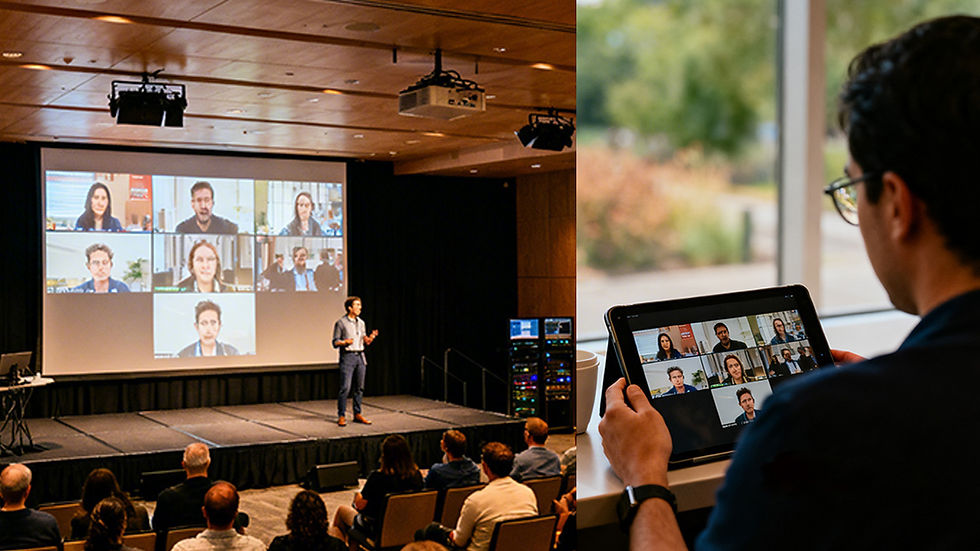
Hybrid events are no longer a novelty. They have become a standard option for companies that want to expand reach, accommodate different audiences, and make the most of their event investment. But just because hybrid events are common does not mean they are easy to pull off well.
In fact, one of the biggest misconceptions about hybrid events is that they are your regular in-person events with a camera added to the back of the room. In reality, a successful hybrid event needs to be designed for two audiences at once: those in the room and those joining remotely. When that balance is missing, one side usually gets a second-rate experience.
So what actually makes a hybrid event work in 2026? It comes down to planning, production, audience experience, and having the right AV team in place from the start.
Start by Treating Hybrid as Its Own Event Format
A hybrid event should not be approached as an in-person event with a virtual afterthought. It needs its own strategy.
The in-person audience is looking for energy, smooth transitions, clear sound, and a polished environment. The virtual audience needs clean video, strong audio, a clear view of presentations, and enough engagement to stay invested from a distance. If you plan only for the people in the room, remote attendees can quickly feel disconnected. If you focus too much on the virtual side, the on-site event can lose its natural momentum.
The most effective hybrid events are built from the beginning with both audiences in mind.
That means asking the right questions early. Who is attending remotely? What do they need to see and hear? How interactive does the event need to be? Will remote guests simply watch, or will they participate in Q&A, polls, breakout discussions, or live chat?
These decisions shape everything that follows, from camera placement to microphone needs to how presenters are coached.
Strong Audio Still Makes the Biggest Difference
If there is one area where hybrid events succeed or fail quickly, it is audio.
People may tolerate less-than-perfect video for a short time, but they will lose patience fast if they cannot clearly hear speakers, panelists, moderators, or audience questions. In a hybrid format, audio plays a significant role in the attendee experience. Remote participants need clean, consistent sound, while the people in the room need audio reinforcement that feels natural and balanced.
That is why professional microphones, proper mixing, and experienced technicians matter so much. A speaker may sound fine to a live audience in a ballroom, but remote attendees can still struggle if the audio feed is poorly managed. Likewise, audience questions may be heard by those in the room but lost entirely online if the room is not set up to capture them.
In 2026, expectations are too high for guesswork. If the goal is a polished event, audio needs to be treated as a top priority, not a box to check.
Video Needs to Serve the Remote Audience, Not Just Document the Room
Another common hybrid event mistake is relying on a single wide camera angle that simply records what is happening on stage. That may technically capture the event, but it does not create a quality viewing experience for remote attendees.
A well-produced hybrid event uses video intentionally. That can include multiple camera angles, clean switching between speakers, integration with a direct feed for presentation slides, and thoughtful framing that helps remote viewers stay connected to the content. If there is a panel discussion, viewers need to see reactions and transitions clearly. If there is a keynote presentation, slides should be legible, and the speaker should remain visually engaging.
Remote audiences are used to consuming high-quality video every day. That expectation carries into corporate events. Good production does not need to be flashy, but it does need to be clear, stable, and professionally executed.
Engagement Has to Be Planned, Not Left to Chance
One of the hardest parts of running a hybrid event is keeping remote attendees engaged.
People joining from home or the office have more distractions, more screen fatigue, and more opportunities to click away.
That means engagement cannot be improvised. It needs to be built into the event structure.
Sometimes that means scheduling live Q&A moments that include both audiences.
Sometimes it means incorporating polls, moderated chat, or on-screen prompts that make virtual participants feel included. In other cases, it means adjusting pacing so the event moves with purpose and avoids long stretches of passive viewing.
Even small details matter. A remote audience should know when a session is starting, what is happening next, and when they can participate. Clear transitions and confident event flow make a major difference.
The best hybrid events do not just broadcast information. They create a shared experience, even when attendees are in different places.
Venue Conditions Matter More Than Many Planners Expect
Not every venue is naturally hybrid-friendly. Room shape, lighting, acoustics, internet reliability, power access, and stage layout all affect the final result.
A room that works well for an in-person audience may still create challenges for a livestream. Poor lighting can make speakers look flat or shadowed. Unreliable internet can disrupt the remote feed. Bad acoustics can complicate both on-site sound and the broadcast mix. Limited staging space may affect camera angles and operator placement.
This is one reason early AV involvement is so valuable. When an AV partner is brought in before the event plan is locked, potential issues can be identified early and solved more efficiently. Site visits, technical reviews, and production planning help avoid last-minute surprises and make the event day far smoother.
Presenters Need Support Too
Even experienced speakers can struggle in a hybrid environment if they are not prepared. Presenting to a room is different from presenting to a room and a remote audience simultaneously.
Speakers need to understand where to look, how to use microphones properly, how slides will appear on the broadcast, and how audience interaction will be handled. They may need reminders to pause for virtual questions or avoid speaking while turning away from the mic. Panelists may need guidance on timing and transitions so both audiences can follow the conversation easily.
A strong hybrid event includes not only the right equipment, but also the right speaker support. Rehearsals, cues, and technician coordination all help presenters feel more confident and make the event feel more polished.
The Right AV Partner Brings It All Together
What makes a hybrid event actually work in 2026 is not just technology. It is the combination of planning, experience, and execution.
Successful hybrid events are designed for both audiences from the beginning. They prioritize audio quality. They use video thoughtfully. They build in opportunities for engagement. They account for venue realities. And they give presenters the support they need to succeed.
Most importantly, they are backed by a team that understands how all of those moving parts connect.
At Corporate AV, LLC, we know that hybrid events require more than equipment delivery.
They require strategy, coordination, and production support that helps your event feel seamless for everyone involved. When done right, a hybrid event does more than extend your reach. It creates a stronger, more flexible event experience that reflects well on your brand from every angle.
If you are planning a hybrid event in 2026, the best time to think through the AV details is early. That is where better experiences begin.


Comments